
Reconstruction
The United States defeat of the Confederacy was momentous, but there was much work to be done to bring the country back together. The brutality of the Civil War left behind not only a scarred landscape, but also a population that had been traumatized from the massive number of casualties and deaths. Furthermore, deep divisions regarding the treatment of African Americans remained.

Reconstruction was a period when the South would be rebuilt, and the nation would attempt to repair its wounds. Leaders worked to bring the North and South back together, give African Americans their rights, and fix the physical damage of the war. Lincoln and some members of his party, called Radical Republicans, had very different ideas about how to rebuild the United States.
Comparing Plans for Reconstruction
Let's compare how Lincoln and the Radical Republicans planned to address Reconstruction. As you read the table below, think about how Lincoln's plan was different from the Radical Republicans' plan, and how that reflected their ideas about slavery.
Lincoln's Reconstruction Plan
Play audio In late 1863, while the Civil War was still ongoing, Abraham Lincoln was already thinking about reconstruction. Under his Ten Percent Plan, 10 percent of the voters in a Southern state would need to swear loyalty to the United States. At that point, the state could form a new state government. If the state also adopted a new constitution that banned slavery, it could send representatives to Congress.
Lincoln opposed punishing the South. Saving the country had long been one of his main goals, and he felt punishment would make that more difficult. He wanted the wounds of the war to heal. He wanted to forgive the crimes of any Southerner who swore loyalty to the United States, except for Confederate leaders.
Radical Republicans
Some members of Congress did not agree with Lincoln's plans for Reconstruction. They felt it was too lenient. These people were called Radical Republicans. When states tried to send representatives to Congress under Lincoln's plan, the Radical Republicans refused to seat them.
Congress passed a stricter Reconstruction plan in July 1864. The Wade-Davis Bill would make states fulfill three requirements in order to rejoin the United States:
More than half of a state's White male adults would need to pledge loyalty—far more than the 10 percent Lincoln proposed.
Only White males who had not taken up arms against the Union could vote for delegates to serve at a state constitutional convention.
All new state constitutions needed to ban slavery.
Lincoln felt the bill was too severe and did not sign it into law.
Lincoln's Assassination
On the evening of April 14, 1865, Abraham Lincoln and his wife, Mary Todd, attended a play at Ford's Theatre in Washington, DC. From a private box above the stage, they were enjoying the play when a man named John Wilkes Booth rushed into the box. Booth was a famous actor who supported the Confederacy and hated abolitionists and Lincoln. He pulled out a pistol and shot Lincoln in the back of the head. Lincoln was pronounced dead the next morning at the age of 56.

People across the nation were shocked by the assassination and deeply saddened. African Americans were especially overcome with grief, since Lincoln was most responsible for their freedom. Vice President Andrew Johnson was sworn in as the next president shortly after Lincoln's death. Johnson had remained loyal to the United States during the Civil War, but as a Southerner, he was sympathetic toward the former Confederate states. This would have profound consequences for Reconstruction.
While the Civil War was being fought, Abraham Lincoln was already thinking about Reconstruction. He did not want to make the South receive
harsh treatment. Lincoln felt that would make it more difficult to reunify the United States. Radical Republicans felt that Lincoln's plan was too
lenient. The Radical Republicans passed a plan that would force more than half a state's White male adults to promise to be loyal to the United States. Lincoln did not sign their bill into law.
Lincoln and the Radical Republicans differed in their approach to Reconstruction. The Radical Republicans believed that the South needed to be treated more harshly than Lincoln wanted them to be treated.
Reconstruction
By 1866, Southern legislatures passed laws to limit the freedoms of formerly enslaved African Americans. Radical Republicans responded by passing the Civil Rights Act of 1866. It gave the federal government power to involve itself in state affairs to protect African Americans. The law also gave them citizenship. President Johnson vetoed the bill, but Congress overrode the veto, and the bill became law.
In 1865, the Thirteenth Amendment, which outlawed slavery, was ratified. The Fourteenth Amendment was proposed in 1866 to put the weight of the Constitution behind the Civil Rights Act of 1866. By the next year, ten of the former Confederate states had not ratified the Fourteenth Amendment. As result, Congress passed the First Reconstruction Act. It created five military districts in those ten states, in which a Union army general would govern until the states created new governments.
Confederate leaders were banned from serving in the government, and states had to submit their new constitutions to Congress for approval. The act also guaranteed African Americans the right to vote in state elections. The Second Reconstruction Act allowed the army to help register voters and organize state constitutional conventions.

Andrew Johnson strongly opposed the Reconstruction Acts. Concerned that he would not enforce them, Congress passed laws to limit his power. One law said that Johnson would need to receive approval from the Senate before he could remove government workers from their jobs.
Congress wanted to ensure that Secretary of War Edwin Stanton would not be removed, since he supported Radical Reconstruction. Johnson ignored the law and fired Stanton, angering many members of Congress.
The House of Representatives charged Johnson with wrongdoing by impeaching him. The Senate then placed Johnson on trial. To convict him, two-thirds of the Senate would need to find him guilty. It fell short by just one vote, and Johnson remained in office until 1869, when Lincoln's second term would have ended.
Johnson continued to veto Reconstruction bills. Congress responded by continuing to pass overrides of his vetoes.
Reconstruction Amendments
During Reconstruction, three amendments were added to the Constitution to protect the rights of African Americans.
Thirteenth Amendment
Outlawed slavery and involuntary servitude in the United States and its territories, except as a punishment for a crime.
Fourteenth Amendment
Guaranteed citizenship to anyone born or naturalized in the United States
Said a state cannot take a person's life, liberty, or property without due process of the law
Promised equal protection of the laws to every person
Fifteenth Amendment
Guaranteed the right to vote to all citizens, regardless of their race, color, or previous condition of servitude

Reconstruction
The rights given to African Americans during Reconstruction allowed them to gain some power in government. For the first time, Black people served in federal and state governments.
Hiram Revels: In 1870, Revels became the first African American to serve in Congress when he became a US Senator. The Mississippian fought against school segregation and pushed for equal opportunities for Black workers.
Blanche Bruce: Working in a variety of positions in the Mississippi state government, Bruce made a big impact. As a county superintendent of schools, he made his system one of the best in the state. In 1875, he became a US Senator. He pushed for protections for Black veterans of the Civil War and tried to integrate the military but was unsuccessful.
Robert Smalls: While enslaved, Smalls took control of a Confederate ship and sailed it into US waters. He and the other enslaved men on board escaped slavery. Smalls later served in the US House of Representatives for 10 years. While in Congress, he worked to help the people of his district and fought to integrate the military.
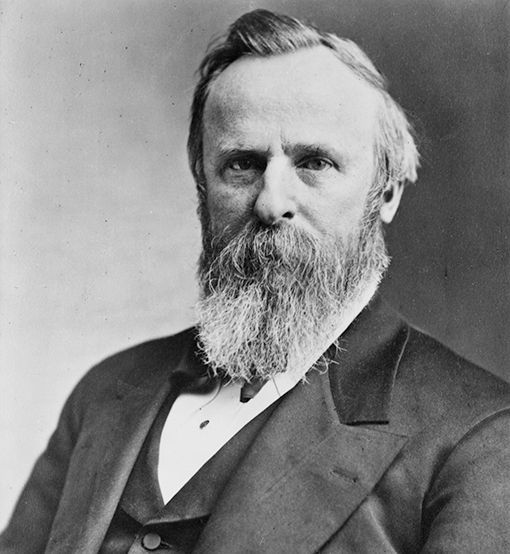
In the 1876 election, Republican Rutherford B. Hayes faced Democrat Samuel Tilden. It was an extraordinarily close election. Neither candidate won a majority of the electoral votes, because it was unclear who had won in Florida, South Carolina, and Louisiana.
Congress formed a commission to decide who would get the electoral votes from those states. It recommended giving all the votes to Hayes, which would make him the winner of the election by one electoral vote. To ensure that Southern Democrats would accept the outcome, Hayes and the Republicans reached the Compromise of 1877.
Hayes promised to withdraw the troops who, since the end of the Civil War, had been ensuring that the rights of African Americans were being protected. Not long after Hayes took office, the last troops left. Republicans won the presidential election, but lost Reconstruction.
By agreeing to remove troops from the South, the Republican Party left all African Americans vulnerable. What followed was many decades of the dehumanizing treatment of Black people.

Reactions to Reconstruction - Southerners
White Southerners did not respond well to Reconstruction. For over two centuries, African Americans had been denied the same rights as White people. The sudden change in the social hierarchy led to a backlash from White people.
As a result, White Southerners took a variety of steps to trample on the rights that formerly enslaved people had recently won. At first, their efforts were not entirely successful. Eventually, though, White Southerners were able to reestablish a system of racial dominance.
White Southerners did a number of things to make life difficult for African Americans. They passed racist Black codes to make it illegal for African Americans to either rent or own farmland. Other laws empowered officials to arrest or fine African Americans simply for not having a job.

A group of White Southerners called the Ku Klux Klan (KKK) formed to spread fear and violence in the Black community. Riding around on horses and wearing white sheets and hoods, KKK members threatened, beat, and killed African Americans and their White supporters. They also burned homes, schools, and churches.
Many freed people were forced to farm land owned by White people under a system called sharecropping. Landowners rented land to Black farmers who had to give a percentage of their crops to the owner. Farmers often struggled to support themselves because White owners took an unfair amount from the farmers. Sometimes the owners would deduct debts owed for supplies from the sharecroppers' portion. It was often nearly impossible to pay back the debt owed. Laws prevented indebted sharecroppers from leaving the land. This system, called debt peonage, effectively left them enslaved.
Under the system of sharecropping Black farmers rented land from White landowners who took an unfair percentage of crops from the Black farmers. These landowners even made their farmers pay for seeds and tools by subtracting those costs from the proceeds from their crops. The result is called debt peonage, which prevented sharecroppers from leaving the land until they paid what they owed the landowners, making them effectively enslaved.
Reactions to Reconstruction - Riots
In 1876, a series of disturbances and race riots struck cities and towns across South Carolina. These were related to the state elections that were to take place that November. Throughout Reconstruction, Republicans had controlled the state government and protected the rights of African Americans. Democrats were hoping to win back control.
The violence was a tactic used by a primarily Democratic paramilitary group called the Red Shirts to intimidate Black voters. The Red Shirts sparked riots across the state, including in places such as Hamburg, Ellenton, and Charleston. In Ellenton, Red Shirts killed 30 Black militiamen and a state senator.

Efforts to suppress the votes of African Americans helped the Democratic challenger defeat the incumbent Republican, Daniel Chamberlain, by just over 1,100 votes. Because of a report of widespread fraud, the result was disputed. Two separate governments formed. Chamberlain remained in office until President Hayes removed the federal troops guarding the state capitol. Democrat Wade Hampton then became governor.
Reactions to Reconstruction - Voting
The Fifteenth Amendment barred states from denying people their right to vote based on their race or color. However, local government officials were devious and passed laws effectively denying Black people the vote, even though race was not the explicit reason:
One tactic was to require people to pay a poll tax in order to vote. Many African Americans could not afford to pay the tax, so they were unable to vote.
Literacy tests were another way that White Southern leaders denied the vote. To cast a ballot, a potential voter would need to read and explain difficult parts of either the federal Constitution or state constitutions. Because African Americans had long been denied an education, many of them could not pass these tests. Therefore, many of them could not vote.
These laws could have also affected uneducated and low-income White people from voting. But White Southern leaders passed laws that said someone could vote if their father or grandfather had. These laws were called grandfather clauses. Since African Americans could not vote before 1867, grandfather clauses did not apply to them.
Reactions to Reconstruction - Jim Crow Laws
Reconstruction began with great promise for African Americans. Not only had they won freedom from bondage, but they could vote and had representation in government. While African Americans were promised these rights by law, many were prohibited from these promises.
That all ended when Reconstruction ended. By the late nineteenth century, White Southerners used laws and threats of violence to reclaim what they believed was their rightful place atop the racial hierarchy:
Southern states passed Jim Crow laws that created separate spaces for White and Black people. For example, Black people were not allowed to use the same public bathrooms as White people and could not go to the same schools. This segregation separated the races.
Violence was a common tactic used to intimidate Black people. During lynchings, a mob would hang an African American who was thought to have committed a crime or did not behave in a certain way, despite most being innocent. These lynchings often happened in a public area as warnings to other Black people.
What was a consequence of the end of Reconstruction for African Americans? They lost many of the rights they had won.

Reactions to Reconstruction - Destruction
In 1898, Wilmington, North Carolina, had a large middle-class Black population. African Americans were running successful businesses and buying homes. It was home to the country's only daily Black newspaper.
The city's government was led by a coalition of White and Black Republicans that also controlled the state government. White Democrats opposing integration feared this coalition would do well in the state elections of 1898.
A White militia called the Red Shirts used many forms of intimidation to scare voters. Riding on horseback, they attacked Black people and frightened voters. Newspapers spread terrible false rumors about Black men. Democratic politician Alfred Moore Waddell told White men to kill Black voters. Because of the intimidation, Democrats won the state elections.
Since there was not a city election that year, Republicans remained in control in Wilmington. Waddell and hundreds of White people burned to the ground the building with the city's Black newspaper. They then rode through town, killing Black people and torching their businesses.
Waddell and the men went to city hall and used their weapons to force the entire government to resign. Waddell was installed as mayor. This incident, known as the Wilmington Insurrection of 1898, is rightfully called a coup, and was one of many unintended consequences of the Civil War.


Comments